

Andrew Shire has been working at FRANK Digital since 1999. He is currently the Senior Colourist and Finishing Editor. Andrew grew up in the Yukon and Saskatchewan, graduating from Melville Comprehensive High School in 1992. He studied computer science, physics, astronomy, and film at the University of Regina. After university, he worked in educational computer sales in Manitoba for Advance Electronics (Professional Department). In the mid-1990s, he started his own business with his father, creating, developing, writing, and selling database software for large-scale seed sales and farming operations, as well as providing educational computer sales throughout rural Saskatchewan.
When and how did you start in the media production industry?
I returned to Manitoba in the late 1990s and became a Manitoba-accredited vocational adult education teacher, teaching multimedia—including desktop publishing, interactive design, animation, and video editing—at a small broadcasting school in Winnipeg. I continued in this role until May 1999, when I began working professionally as a multimedia specialist and video post-production editor at MidCanada Production Services Inc. (now known as FRANK Digital).
What area of the film industry do you work in now and why?
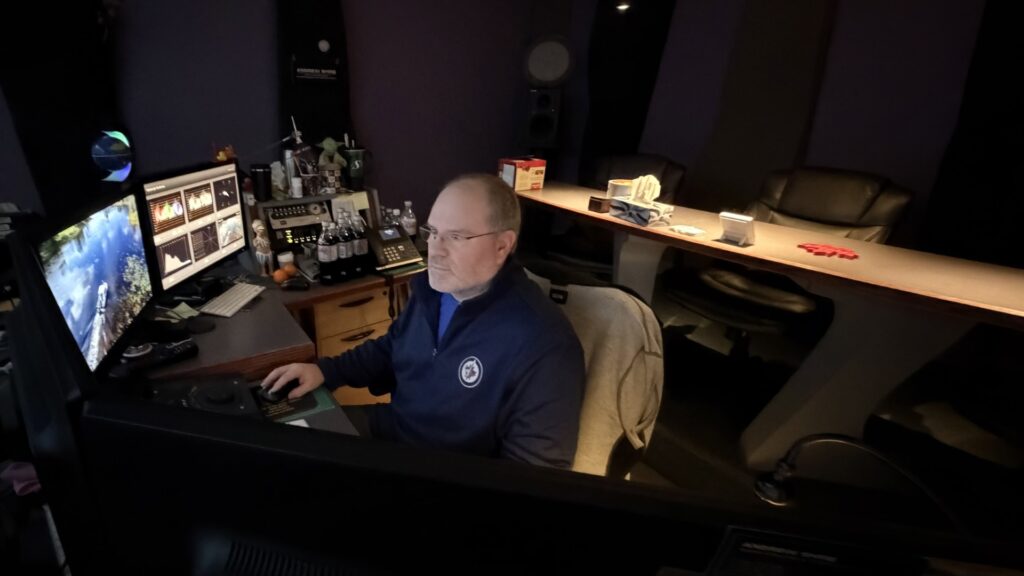
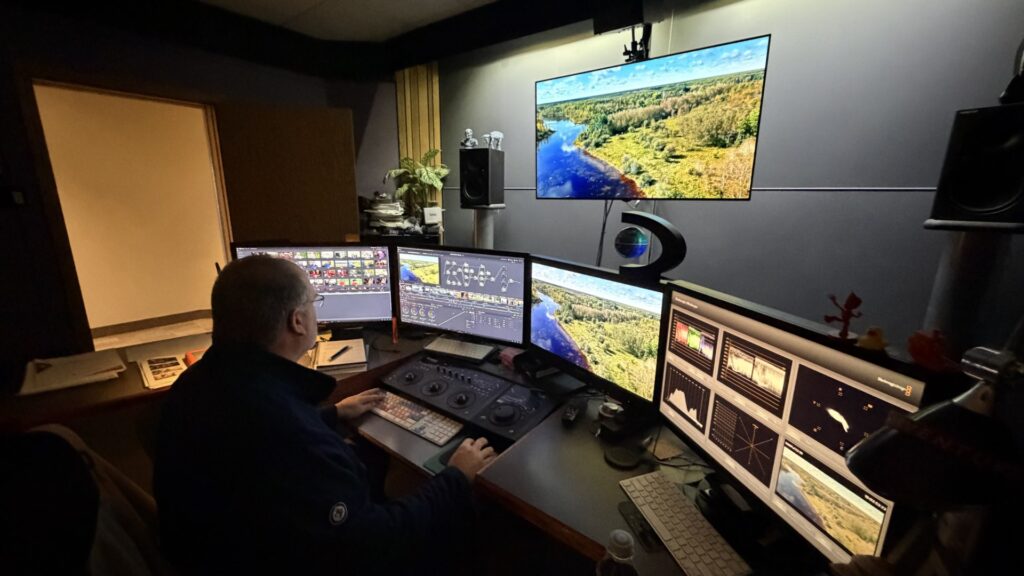
Back in May 1999, I began working in post-production in the film and television industry, mainly editing television commercials, documentaries, corporate and film projects, as well as working as a multimedia specialist on interactive CD-ROMs, DVDs, and Blu-rays. Over the years, my focus shifted to the finishing stage of post-production—moving from offline editing to online conforming & editing, colour management to colour correction, and final online finishing, package editing, and delivery. This shift was primarily driven by the industry transition from analog SD (standard definition) to digital HD (high definition), with me being at the forefront at the turn of the century, using some of the first HD editing equipment (cameras, software, and hardware).
What has been a substantial change in the industry since you started?
Well, as mentioned above, the biggest change for me was the change from analog SD (standard definition) to digital HD (high definition). Though this transition was not overnight and started with Sony’s HDCAM/SR and Panasonic’s DVCPRO HD tape formats, which then morphed into Sony’s XDCAM HD and Panasonic’s P2 digital formats, the introduction of the RED Camera around 2006/2007 completed this dramatic digital shift in the industry. Big names in broadcasting and film, like Sony, Panasonic, Canon and ARRI, makers of very expensive HD/2K digital cameras, were put on notice by less expensive HD, 4K, 8K digital cameras, which were more accessible to smaller film and television markets worldwide.
This change in the production industry also shifted post-production workflows from analog and digital SD/HD tape to colour-managed RAW & Log digital formats, requiring a specialist in colouring and finishing, which I was happy to step into. The idea of a large broadcast playback & recording deck in the edit suite, capturing and/or outputting video in real-time, seems like such an ancient thing to do today, but that was part of the post-production workflow until digital video cameras like RED changed the industry, and the industry has not looked back since. The AI change may be the next big thing; those tools are coming, some are here already, but we do not really know what is going to happen and how it will change the industry again.
What advice would you give to someone starting off in the media production industry?
First, never stop learning; this industry is a constantly moving target of innovation and cutting-edge technology, both in media production (hardware: cameras, lighting, sound recording, virtual production, etc.) and post-production (software and hardware: editing software, compositing software, computers, AI). Second, work all the jobs and be willing to start small and work from the ground up. Do not expect to be the camera operator or the editor right away; remember to work all roles. You will end up where you want to be once you’ve done the work. Third, the media production industry is about everyone doing their job correctly and doing it well; it is always about what comes next. If you perform your role properly, the next person in the workflow will thank you. The media production process is linear: it starts with an idea, then moves through pre-production, production (camera, set, action), and finally post-production. When everyone has done their part properly, there is a finished end product, of which you will be a part.
Why is learning and training important?
The media production industry is always changing, evolving, and innovating. Working in such a rapidly shifting industry requires new knowledge to understand how and where we all fit in. I personally spend about 5 to 8 hours each week trying to stay current, learning about what is happening in my small post-production sphere of technology (hardware, software, AI). The learning never stops. Without ongoing learning and training, the media production industry would certainly not be innovating as quickly as it has over the past few decades. It’s very exciting.
What are some of the films, TV series or even books that have inspired you? How about anything new you’ve been into?
The movie that truly sparked my interest in film was the first Back to the Future, which then became a trilogy. This concept of multiple movies continuing a story fascinated me. I know there were other sequels, prequels, and so on, but it wasn’t until Back to the Future that I understood what it took in production to plan and execute a three-movie arc. Recently, I’ve been enjoying the alternate reality of For All Mankind on Apple TV+, a fantastic series with outstanding production quality. I am also currently reading the last few Andy Weir books (The Martian, Artemis, and Project Hail Mary).
Is there something about you or an interesting past experience that you’d like to share with your colleagues?
I grew up in the Yukon (grades 1 – 7) in the 1980s. I went to the 1986 Northern BC Winter Games in alpine skiing. I also played hockey at a pretty high level throughout Saskatchewan until going to University where I focused on computer science. I still love downhill skiing and plan to continue until I can no longer do so.
Is there someone within the film industry you would like to work with and why?
I think it would be awesome to work with director Robert Zemeckis, helping him colour and finish his next Oscar-winning movie. Of all the directors to possibly work with, he has inspired me the most, both from the quality of the direction to the innovative, technically awesome movies he’s made (Back to the Future 1, 2 & 3, Who Framed Roger Rabbit, Contact, Forrest Gump, just to name a few).
Where do you see yourself in ten years from now?
In ten years from now, I’ll be contemplating retirement while consulting with my personal AGI (artificial general intelligence) on the weekly delivery, editing, colouring, and finishing of an AIG (artificial intelligence-generated) VR (virtual reality) created dramatic experiential series available weekly on AppleVR+
FTM is a member of the Province of Manitoba’s Sector Council Program funded through the Manitoba Business, Mining, Trade & Job Creation. FTM builds a highly skilled and adaptable film industry workforce to support the activities of Manitoba production companies. FTM collaborates and partners with members of the film and television industry to identify training needs to support workforce development output.