
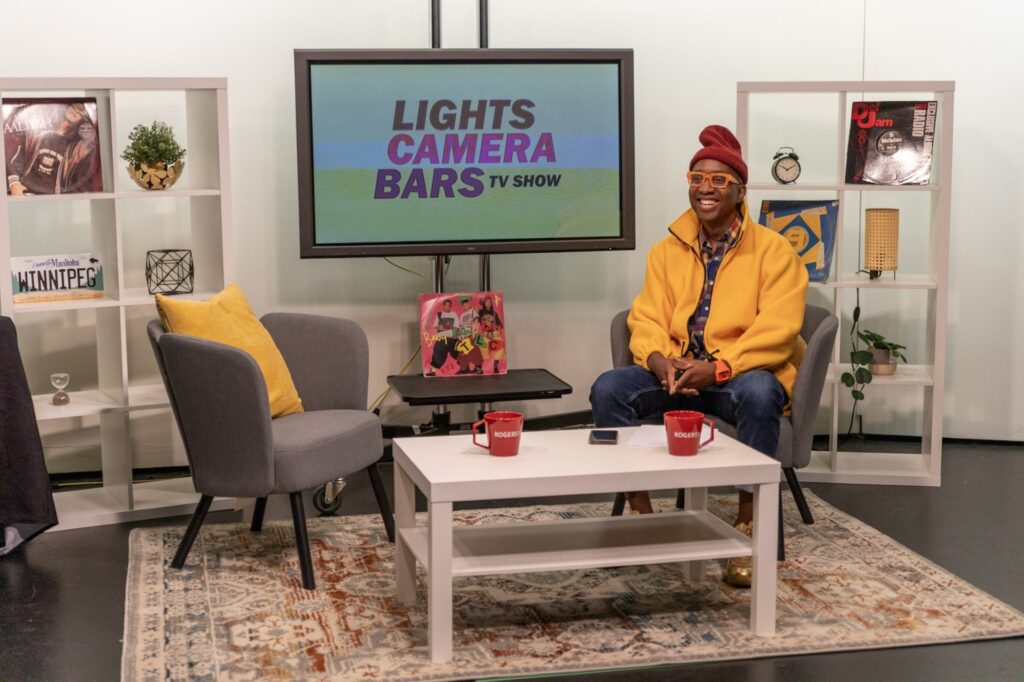
Chris Sharpe is a Winnipeg-based producer, director, and creative entrepreneur dedicated to championing Black-led stories from the Prairies. He is the founder of Black Film Space Manitoba, where he launched the Black Imagination Film Set Program to train emerging filmmakers. Chris has produced and directed projects including Relationship Remix (CBC Gem), Cool Sweepings (Bell Fibe TV1), Kung Fu & Basketball (in development), and Lights Camera Bars (in development).
With a career spanning documentary, reality, and live events, Chris blends culture, humour, and authenticity while creating opportunities for diverse talent in Manitoba and beyond.
When and how did you start in the media production industry?
I started in the media production industry when I was 14 years old. I was a self-taught graphic designer and began promoting events out of my mom’s basement in London, Ontario. The events grew so quickly that I had to move them to concert halls and nightclubs.
When I was 17, I moved to Winnipeg and began running the Paddlewheel River Rouge all-ages events, as well as major concerts— including the 2001 Shaggy Live in Concert with Showtime Productions. I also coordinated events for the Indigenous Games in Thompson in 2006. Around that time, I graduated from Red River College’s Digital Multimedia Program, majoring in video production.
Soon after, I became the Event Culture Director for the City of Thompson and produced my first documentary, Canada Day in the City of Thompson. I later produced, directed, and branded a national reality series with Shaw TV called Urban Star Contest in 2011.
After six years in Thompson, I moved to the Northwest Territories and worked as the Marketing and Communications Coordinator for the Town of Inuvik, where I produced a TV show called What Up Inuvik.
I eventually moved back to Winnipeg, and in 2022, I founded Black Film Space Manitoba to foster more Black-led stories from the province. In 2025, we released Relationship Remix, now streaming on CBC Gem.
I also launched the Black Imagination Film Set Program, an initiative designed to give Black and other marginalized creatives hands-on experience on professional film sets. The program continues to grow, with a steady flow of new students gaining real on-set training.
Our current slate includes Cool Sweepings, now filming and set for release on Bell Fibe TV1 in 2026; Lights Camera Bars in development with Rogers TV; and a feature film in development titled Kung Fu & Basketball.
What area of the film industry do you work in now, and why?
I currently work in producing, directing, and developing Black-led film and television projects. I focus on creating original stories from Manitoba that highlight Black experiences, culture, and creativity, stories that haven’t traditionally had space in the Prairies.
I also work in industry development through Black Film Space Manitoba, where I help train emerging Black and minority filmmakers through our Black Imagination Film Set Program. I do this work because I believe representation matters, and I want to help build a sustainable pipeline of talent while creating opportunities I didn’t always have when I started.
What has been a substantial change in the industry since you started?
A major change I’ve seen since I started is the industry’s growing recognition of the importance of diverse voices both in front of and behind the camera. When I began, there were very few opportunities or platforms for Black creators, especially in the Prairies. Today, there is a much stronger push for authentic storytelling, community representation, and inclusive hiring practices.
Another big shift is how accessible filmmaking has become. Technology, equipment, and distribution tools are far more affordable, which means creators don’t have to wait for permission to start building their own projects, audiences, and careers.
These changes have opened the door for organizations like Black Film Space Manitoba to not only exist but to thrive, allowing us to nurture new talent and tell stories that would have never made it to screen twenty years ago.
If you could give yourself advice today to yourself in the past, what would it be?
If I could give my younger self advice, I’d tell him to trust the journey and not be afraid to take up space. I’d remind him that his ideas are valuable, even if the industry isn’t ready for them yet. I’d tell him to stay patient, stay focused, and keep creating, because the opportunities he dreams about will come with persistence.
I’d also tell him to build community early. The people who believe in your vision will help carry you through the tough moments, and collaboration will take you further than trying to do everything alone. And finally, I’d tell him not to be scared of failure. Every setback becomes part of the story that makes you stronger, wiser, and more resilient.
What advice would you give to someone starting in the media production industry?
My advice to someone starting in the media production industry is to start creating right away, even if you don’t have the perfect gear or the perfect plan. The more you make, the faster you grow.
I’d also tell them to build relationships early. This industry runs on collaboration, and the people you meet now could become your future partners, crew, or mentors. Don’t be afraid to reach out, ask questions, and learn from others.
Another key piece of advice is to stay adaptable. The industry changes fast: technology, platforms, demand, so be open to learning new skills and embracing new opportunities.
And finally, believe in your voice. Your story, your perspective, and your background matter. Don’t wait for permission to tell your story. Start now, stay consistent, and keep pushing forward.
Why is learning and training important?
Learning and training are essential because the media industry is constantly evolving. New technology, techniques, and platforms emerge all the time, and staying current ensures your work remains relevant and professional.
Training also builds confidence and skill, allowing creators to bring their ideas to life effectively. For emerging filmmakers, hands-on experience is invaluable; it’s one thing to learn in a classroom, but entirely different to apply that knowledge on a real set.
Finally, learning and training create opportunities. The more you know, the more you can contribute, collaborate, and take on larger projects. It’s not just about improving your craft; it’s about building a sustainable career and helping others grow alongside you.
What are some of the films, TV series or even books that have inspired you? How about anything new you’ve been into?
Some of the films and shows that have inspired me over the years include Starship Troopers, Gremlins, Blade, Star Wars, and The Dave Chappelle Show. I’ve always been drawn to projects that push boundaries, blend genres, or bring humour and heart into unique worlds. These works taught me the importance of storytelling, style, and taking creative risks.
More recently, I’ve been inspired by projects that center diverse voices and untold stories, both in film and TV. I’ve been following shows and films from Black creators like Ryan Coogler’s Sinners, as well as international content that blends culture and innovation.
Is there something about you or an interesting past experience that you’d like to share with your colleagues?
One interesting experience I often share is how I got started in media and events at just 14 years old, running and promoting shows out of my mom’s basement in London, Ontario. That early hustle taught me creativity, resourcefulness, and how to build a community around a shared passion, even before I fully understood the industry.
Another experience I often reflect on is producing my first documentary for the City of Thompson, Canada Day in the City of Thompson. It was my first real chance to tell a story that mattered to a community, and it reinforced why I love this work: connecting with people, celebrating culture, and giving voices the platform they deserve.
These experiences remind me to stay curious, take risks, and keep building opportunities, not just for myself, but for others in the industry.
Is there someone within the film industry you would like to work with and why?
I would love to work with Seth Rogen because of his unique ability to blend humor with heart in his projects. His work inspires me to take creative risks while still connecting with audiences on a human level.
Collaborating with someone like him would be an incredible opportunity to learn how to balance comedy, storytelling, and cultural relevance, while also exploring new ways to bring diverse stories to the screen. I admire creators who are bold, innovative, and bring authenticity to their work, and Seth Rogen embodies all of that.
Where do you see yourself ten years from now?
In ten years, I see myself building a catalogue of films and TV shows that grow into global brands, stories that excite audiences and expand into video games, music, and other creative experiences. I want to create content that not only entertains but also inspires, connects communities, and opens doors for emerging Black and diverse creators. My goal is to have a sustainable, multi-platform creative company that continues to push boundaries and tell stories that matter.
FTM is a member of the Province of Manitoba’s Sector Council Program funded through the Manitoba Business, Mining, Trade & Job Creation. FTM builds a highly skilled and adaptable film industry workforce to support the activities of Manitoba production companies. FTM collaborates and partners with members of the film and television industry to identify training needs to support workforce development output.