
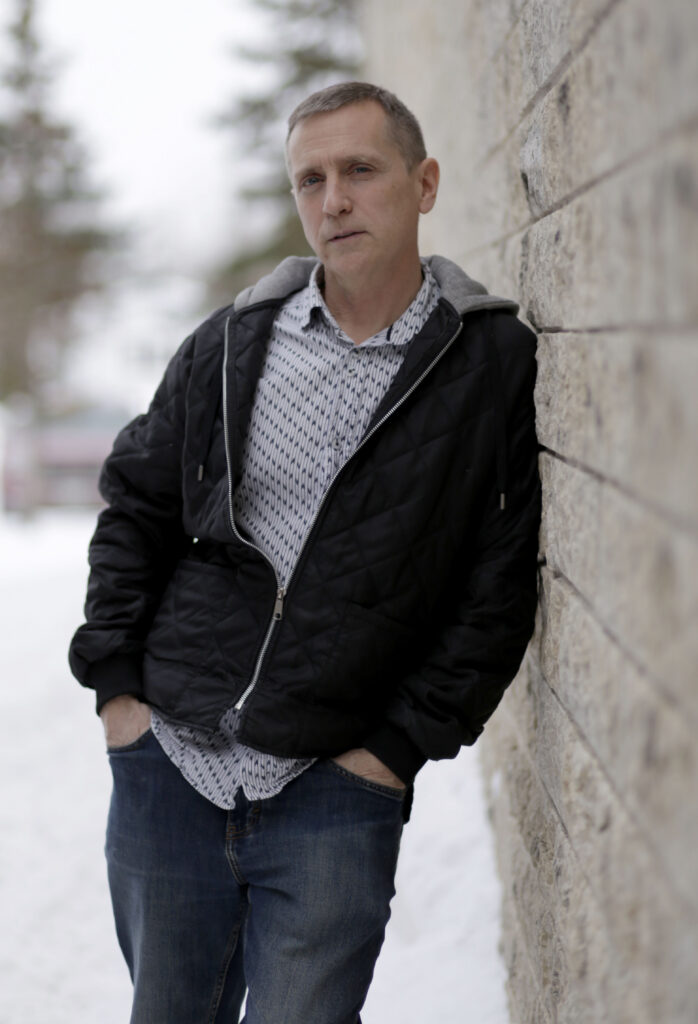
James McLellan’s passion for film began in the early 1990s after creating an eyebrow-raising music video for his high school film festival. He became a visual arts teacher and pioneered narrative film production education in Winnipeg public schools over a 28-year career, producing 14 feature films and countless shorts, forming the basis of the Rogers TV featurette series Hollywood High. He has received a Prime Minister’s Award for Teaching Excellence and an NAEA Digital Educator Award. A champion of Manitoba independent filmmakers, he is a founding board member and current president of The 48 Film Festival.
When and how did you start in the media production industry?
I guess I really got my interest piqued by Ron Lamoureux when I was in grade 12 at Dakota Collegiate. That was like back in 1992. He had us making videos in his transactional English class, and I kinda got hooked. What’s crazy is how things have become so much easier to make films, yet so much more complicated. I don’t think many Transactional English classes are making films in today’s grade 12 classes. Students are much more sensitive about recording themselves and their ‘digital footprint’.
What area of the film industry do you work in now, and why?
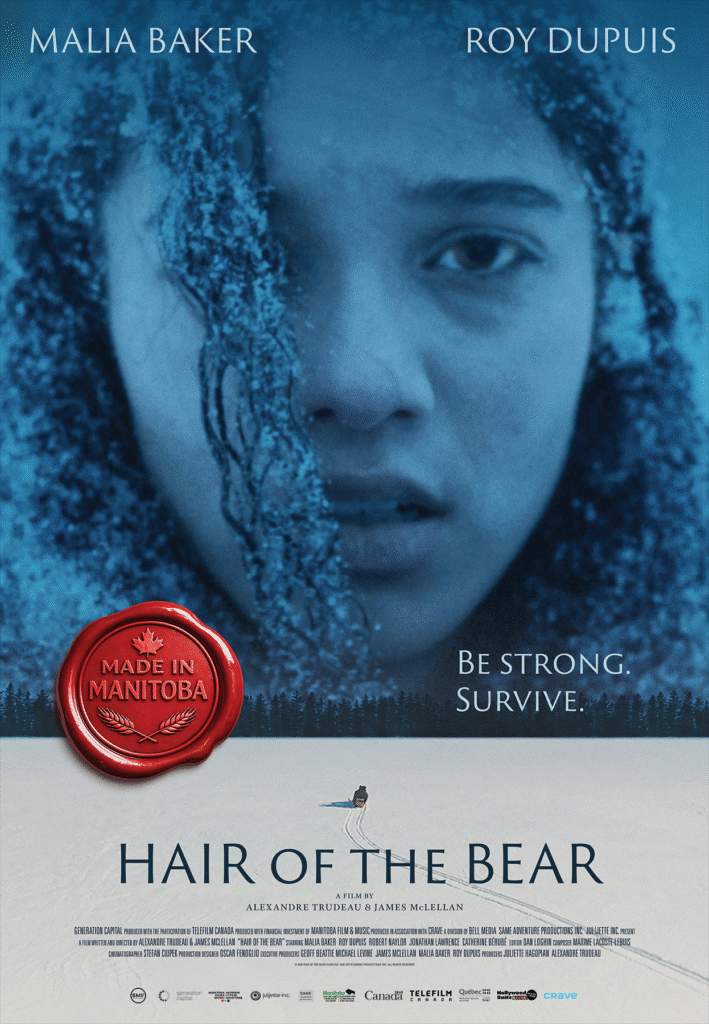
I’m primarily a film production teacher at Oak Park High School, which works for me, as part of the job involves producing narrative films with the students. The constant shooting keeps the blood pumping, and it’s great to see the students take their films to GIFF each summer. Outside of teaching, I’m an indie writer/director, and typically, I throw my hat into the ring doing camerawork to support local productions any way I can, but Hair of the Bear has been my main focus the last eight years. I’m also currently working with Ben Williams on The 48 film festival. Ben and the rest of The 48 team are such community builders! It’s an incredibly positive experience to be a part of, and I think we need really fun events like The 48 in our community to remind us of how special the process of storytelling is when it’s stripped down to the bare essentials.
What has been a substantial change in the industry since you started?
Well, everyone literally has a camera now. Everyone. We are all visual storytellers now. So it’s harder to draw attention to stories you want to tell. They have to be very strong to hold people’s attention. I mean, the Romantic Comedy genre is a bit dead now. Who saw that coming? It’s wild to me. And now generative AI video. I am really unsure of how to advise young filmmakers. Things are changing so fast. But if you are a storyteller who loves the art of telling stories and connecting with audiences on an emotional and intellectual level, there will always be a place for you in filmmaking. We’re just in a period of evolution. I remember the days when the Canon XL-1 dropped. Danny Boyle shot 28 Days Later on the XL-1 with PL mounts. After that, everyone had a DV camera, but not everyone made films like The Celebration. And films like The Celebration were not possible before DV, so it was something new, and it was transformative.
If you could give yourself advice today to yourself in the past, what would it be?
Start by perfecting short form. I think in my early years, I spent too much time working on massively long projects – and that helped me later, managing full schedules, but ultimately, you need to shrink down to shooting a perfect one-minute film and build back out from there. The film industry is a very competitive space. It’s not good enough to turn lead into gold; you need to be able to turn nothing into gold, that’s filmmaking.
What advice would you give to someone starting off in the media production industry?
The industry is tough. You always want to come into it strong. For me, that means getting a post-secondary degree or trade. That gives you skills and options and allows you to value yourself and the work you do. I always say, ‘protect your own story, because film doesn’t care about your story.’ Which is to say, care for yourself and invest in your future.
Why is learning and training important?
We are always learning and re-mapping our understanding of things. If you aren’t, you’re stuck; you aren’t moving forward. I often shot a lot of close, quiet moments with actors at 50 or 85mm, which, for framing and focus, often puts you 6 feet or more from your subjects. I remember discussing with Stefan Ciupek on Hair of the Bear and him saying he wanted the camera to ‘be with Tori’ to get the camera physically closer to her, so we feel we are with her. That concept results in wider lenses, and my thinking on lens choices definitely evolved after that conversation.
What are some of the films, TV series, or even books that have inspired you? How about anything new you’ve been into?
I am a huge fan of Charlie Kaufman and Danny Boyle for different reasons, of course. Kaufman has a powerful way of taking a really out-there idea and making it profound, yet accessible for a wide audience. Boyle discovers and develops raw talent and is a powerful storyteller. Those two have been big influences on me. It’s funny now that I say that, I think you can see Boyle and Kaufman’s influence on my short Period Piece.
I am always keeping up with what is being shot by our local filmmakers. I loved the humour in Rumours by Madden and the Johnsons. It was like Winnipeg’s version of Mars Attacks. Lately, I have been reading local writers; I just finished M. Deluca’s Divorce Party, which had a lot of visual sequences that I enjoyed staging in my head.
Is there someone within the film industry you would like to work with and why?
First, I’ll say that working with Juliette Hagopian has been amazing! It’s been a Herculean effort to realize Hair of the Bear, so it’s hard to imagine having done that 40 times. She’s had a huge impact on Canadian and Manitoban cinema. She really put our film on her shoulders and got ‘er done, and Alexandre and I will be forever grateful to her for that.
I think it would be fun to shoot another film with Steve Kostanski. We did a feature together about 25 years ago. I love the practical effects he pulls off. The troll scene in and outside the bar in Deathstalker was super fun!
Links to some of James McLellan’s work:
Period Piece:
https://www.cbc.ca/player/play/video/1.4336504
Tucked And Folded Away:
https://nsi-canada.ca/film/tucked-and-folded-away/
FTM is a member of the Province of Manitoba’s Sector Council Program funded through the Manitoba Business, Mining, Trade & Job Creation. FTM builds a highly skilled and adaptable film industry workforce to support the activities of Manitoba production companies. FTM collaborates and partners with members of the film and television industry to identify training needs to support workforce development output.