
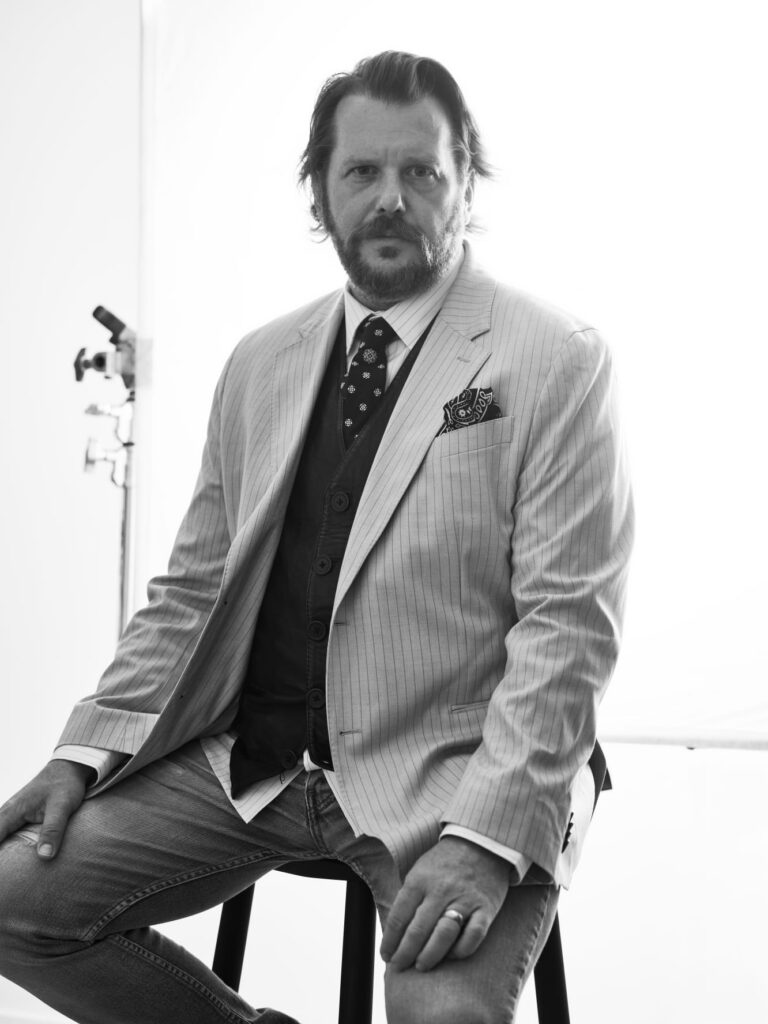
Aaron Merke is an actor/comedian from and living in Winnipeg, Manitoba. Aaron started his career training with the late Del Close at the Improv Olympic in Chicago.
Returning to Canada, Aaron became part of the Second City Touring Company and the Artistic Director of the False Idle Factory Theatre Company. Aaron again left Canada, this time for New York City, where he performed with People Improv Theatre.
Returning to Toronto, Aaron founded KUNG-FU, the 2006 Canadian Cage Match Champions, and competed as the Canadian Team at the 2006 Chicago Improv Festival. Aaron was the writer and director of False Idle Factory’s Shobu Show/World Supremacy Wrestling, and was featured on Much Music and in The Globe & Mail.
Aaron has been on Much Music’s top-rated show Video on Trial and was the host and sketch writer for Much Music’s comedy special LOL. Aaron was also a regular on the Showcase television show Retail, was in the Comedy Network series House Party, has appeared in the films Make it Happen and Foodland, and can be seen in an upcoming episode of HBO Canada’s critically acclaimed comedy series Less Than Kind.
When and how did you start in the media production industry?
I started through performance—improv, sketch, and live comedy—because it was the quickest way to build real reps and a point of view. That led to writing comedy for MuchMusic’s Video on Trial, and then hosting, writing, and producing my own show, LOL. From there, film and TV felt like the natural next step. Over time, makeup FX became an extension of character work for me. Once you understand transformation—how a face, body, or silhouette changes the story—you start thinking like a director too. The multi-hyphenate path wasn’t a master plan; it was a natural evolution of wanting to understand—and shape—the full experience.
What area of the film industry do you work in now and why?
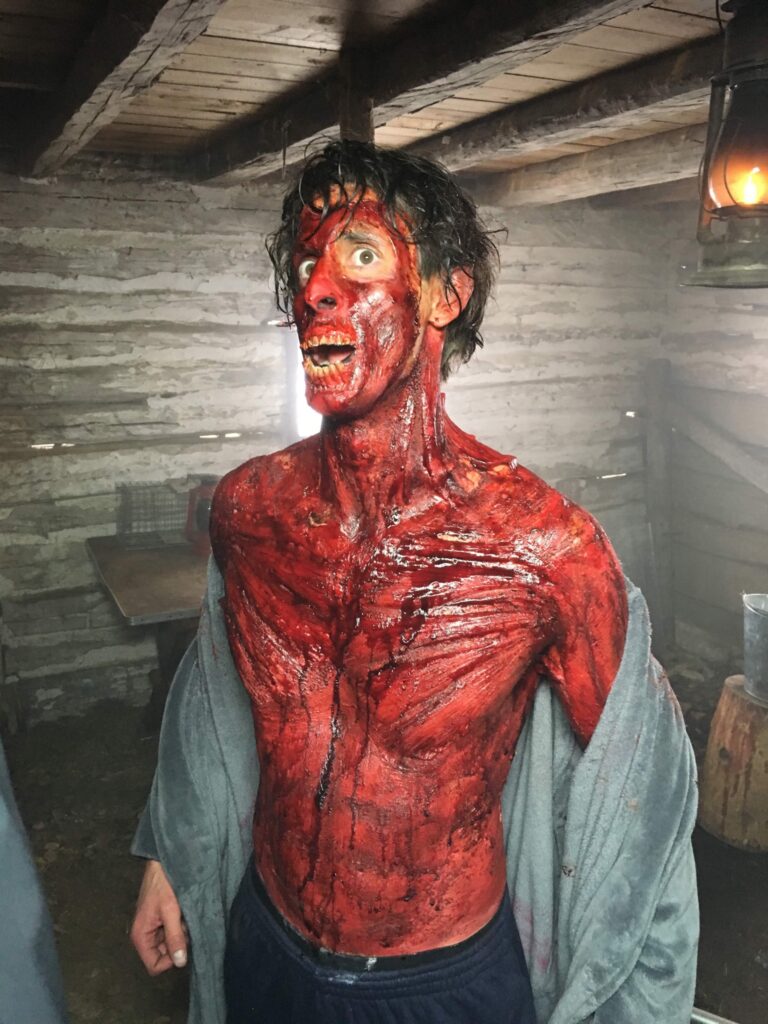
Right now I work across acting, makeup FX/creature work, and directing/producing—sometimes separately, sometimes all on the same project. I stay in that overlap because it’s where I’m most useful: performance gives me story instincts, makeup FX gives me practical problem-solving, and directing lets me unify tone, pacing, and design into one clear vision. I’m drawn to work that’s character-driven, a little daring, and still grounded in something human.
What has been a substantial change in the industry since you started?
The biggest change is the speed—more platforms, more content, faster turnarounds, and less time to “wait until it’s perfect.” The upside is that there are more doors. The downside is you have to be sharper about your voice and your value, because the noise level is high. Another major shift is the expectation that people are multi-skilled: whether you’re a performer, a technician, or a director, you’re often also building proof-of-concept, creating your own opportunities, and learning how to package your work. And of course—AI. We’re in the middle of that shift right now, so I think the honest answer is: we’ll see what it becomes, and who it ultimately serves.
If you could give yourself advice today to yourself in the past, what would it be?
Stop waiting for permission. Make the thing. Also, document your work early—clips, BTS, process, lessons learned. Your archive becomes your leverage. And protect your energy: not every “opportunity” is aligned, and burnout is expensive.
What advice would you give to someone starting off in the media production industry?
Get in front of people. Get in the room. Get on set in the area you actually want to work in. If you’re going to work for free, do it for a limited time and with a clear purpose—skills, relationships, credits, or access. And make small things consistently: short scenes, micro-shorts, makeup tests, tiny shoots. Consistency builds skill, relationships, and confidence. Finally, be someone people want on set—prepared, calm, collaborative, and reliable. Talent gets noticed; professionalism gets rehired.
Why is learning and training important?
Because training makes you repeatable under pressure, and pressure is the job. It gives you techniques you can rely on when the day is long, the stakes are high, and the set is moving fast. Training also gives you a shared language with other departments. The better you understand each other’s process, the smoother the work gets—and the more creative you can be inside real-world constraints.
What are some of the films, TV series, or even books that have inspired you? How about anything new you’ve been into?
It constantly changes. As I get older, I get curious about random things and go down rabbit holes. Recently, I went deep on Sir Alec Guinness—he’s so much more than Ben Kenobi. That started because Peter Sellers was a fan, and I became a Peter Sellers fan because Mike Myers was a fan. I was a fan of Mike Myers when I was a kid. I love that chain: your influences, and then your influences’ influences. It keeps expanding your taste—and your toolkit.
Is there something about you or an interesting past experience that you’d like to share with your colleagues?
I’ve built my career in the overlap of performance + design + direction, and I genuinely love translating between departments. I’m happiest when I’m solving story problems from both sides: “What does this moment need emotionally?” and “How do we build it practically so it reads on camera?”
Is there someone within the film industry you would like to work with and why?
Martin Short—because he was such a big part of my childhood. Honestly, anyone from SCTV. And I’d love to work on a show or film with people whose first creative language comes from the Del Close / iO Chicago lineage. It’s a bit of selfish nostalgia, but I want to play in that sandbox. People like Ike Barinholtz, Jack McBrayer, Amy Poehler, Tina Fey, Dan Bakkedahl—those “old-timey Chicago comedy cats.”
Where do you see yourself ten years from now?
Ten years from now, I see myself leading projects that are unmistakably mine—acting in them, directing them, and building worlds through my shop, Aa Labs. I want a slate of character-driven comedy and genre work that travels.
FTM is a member of the Province of Manitoba’s Sector Council Program funded through the Manitoba Business, Mining, Trade & Job Creation. FTM builds a highly skilled and adaptable film industry workforce to support the activities of Manitoba production companies. FTM collaborates and partners with members of the film and television industry to identify training needs to support workforce development output.